
Types of PLA Filaments Explained


Imagine exploring a range of PLA filaments, each with its own unique characteristics and applications, while maintaining the simplicity of printing you love.
If you're eager to take your 3D printing to the next level and want to discover a world beyond basic PLA, you're in the right place. You don't have to dive into a sea of aimless options, because we're here to help.
We invite you to dive into our article, your ultimate guide to choosing the perfect PLA filament.
We'll explore the different types of PLA filaments available, show you what they're ideal for, and reveal the brands that will give you the most outstanding results. Don't miss the opportunity to take your 3D creations to the next level.
Different types? How many types of PLA are there?
PLA itself is a biodegradable thermoplastic derived from natural resources such as corn starch or sugar cane. From this basic PLA, numerous variants have been developed to meet specific printing needs.
Most PLA filament variants with special properties are produced by a fusion process, where additional components are incorporated that modify their characteristics in various ways.
These additional components may include wood particles that give a natural look and feel to the prints. Tiny metallic particles can also be incorporated to give a metallic look and feel to printed objects.
Another approach is to change the color or even give unique properties to the filament, such as the ability to glow in the dark or glow under black light.
Imagine being able to print with glow-in-the-dark PLA, or perhaps explore magnetic PLA, where the magic of 3D printing combines with magnetized strength.
Would you like your projects to be as elegant as marble? Marble PLA allows you to achieve that distinguished look in your creations.
Below, we will discuss some of the most common PLA filament types and their applications.
Types of PLA filament to choose from
Strong PLA (PLA+ or PLA Pro)
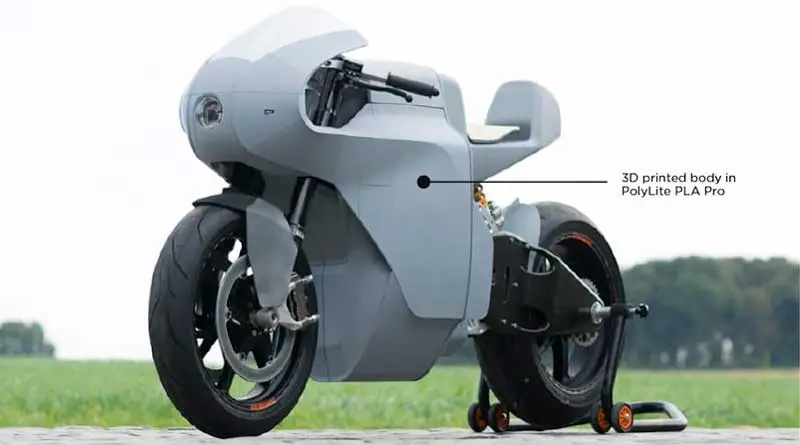
PLA+ is an improved variant of conventional PLA. Offers greater strength and durability, making it ideal for functional parts and prototypes that require greater robustness.
It is easy to print and retains the biodegradability of the original PLA.
PLA+ is a general term for filaments that enhance some aspect of the basic PLA, so the properties of one brand's PLA+ filament will vary significantly from another.
PolyLite PLA Pro by Polymaker is an exceptional solution for increased strength and durability without sacrificing the ease of use we value so highly in PLA filaments.
This filament, PolyLite Pro, achieves a remarkable balance by combining the characteristic stiffness of conventional PLA with flexibility and remarkable impact resistance.
Flexible/soft PLA
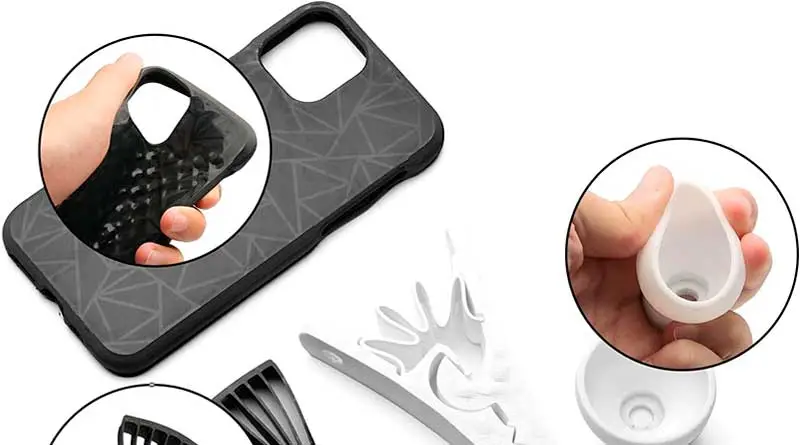
Flexible or soft PLA is a filament that allows the printing of flexible parts, such as seals, gaskets or phone cases. It offers some flexibility without losing the ease of printing characteristic of PLA.
Soft PLA tends to be more flexible than TPU filaments, making it an excellent choice for insoles, phone cases and more high-wear parts.
As with any flexible filament, soft PLA can pose certain challenges during use, especially if your printer is equipped with a Bowden extruder.
Often, a phase of experimentation is required to properly adjust the print settings and achieve optimal results, making it less than ideal for those new to 3D printing.
However, once you have mastered the peculiarities of this material, flexible PLA becomes a valuable solution for a wide range of projects, offering unique properties and benefits that make the investment of time and effort worthwhile.
The filament line Flexible PLA from Sainsmart, is one of the options for flexible PLA brands available on Amazon.
Wood PLA

Wood PLA contains real wood fibers, which gives prints an authentic wood look and feel. It is excellent for projects that require a rustic look.
This produces prints of the same color and texture as real wood. You can also sand, stain and seal your prints similar to an all-wood object. The small amount of PLA present acts as a bonding agent to hold the wood pulp together and allows you to print it like any other PLA filament.
Although there are numerous options of wood-filled PLA filament available on the market, our main recommendation is to PolyWood from Polymaker.
This filament uses a special foam instead of wood fiber to achieve the look and feel of wood, without the risk of clogging your printer nozzle.
While it is important to note that PolyWood is not composed of real wood materials, it has the advantage that you can still apply conventional woodworking techniques and products, such as staining and sealing, to achieve results very similar to real wood.
Silk PLA or Silk
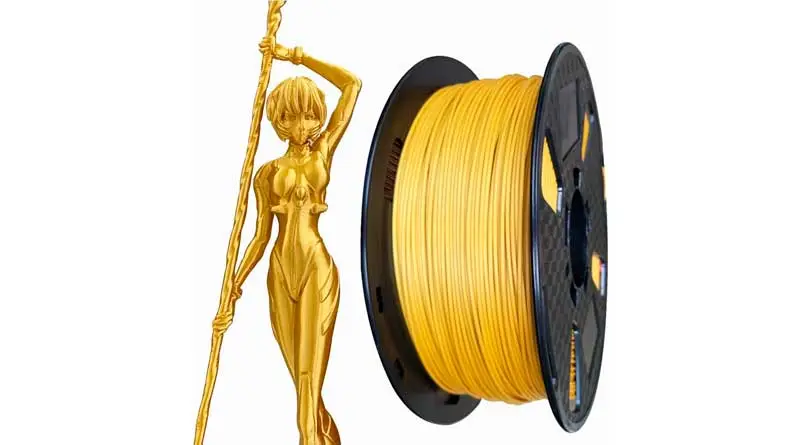
Silk PLA, also known as Silk PLA, has a shiny finish and a silky smooth texture. It is ideal for decorative pieces and sculptures, as it reflects light in a unique way.
When you're looking to give your 3D prints a truly eye-catching finish, silk PLA filament is the perfect choice.
This type of PLA filament provides a level of surface gloss that is between glossy and matte, providing a distinctive look to your creations.
Prints made with silk PLA often exhibit a subtly metallic sheen and sometimes have a slight translucency. This makes it an ideal choice for projects that require a touch of elegance and style, such as decorative items and accessories.
For silk PLA, we recommend the brand Overture . They have 10 single color and 9 two-color strands available in their silk line.
Matte PLA

Matte PLA has an opaque finish that avoids glare and reflections. This makes it perfect for design projects and mock-ups where a more sober and professional look is sought.
Matte PLA filament makes it more difficult to detect layer lines in finished 3D prints.
Although most PLA prints have a glossy texture, matte PLA filament is characterized by its flat, opaque surface finish.
This type of filament becomes the ideal choice when your 3D prints require a more natural and organic look. It is also an excellent choice for projects that need to be photographed, as its matte surface minimizes light reflections and layer lines, compared to glossy PLA.
When it comes to matte PLA filaments, our top recommendation is to PolyMakerThis brand offers a wide range of matte color options.
Rainbow PLA
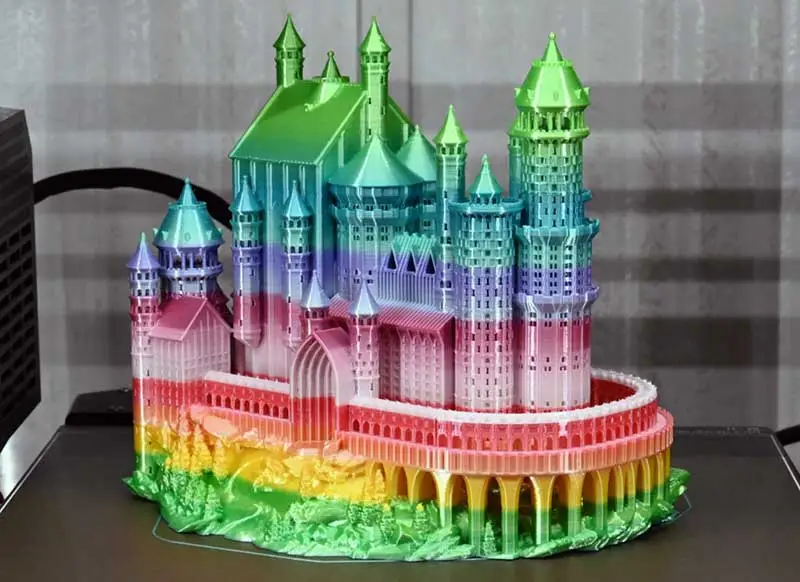
Rainbow PLA filament is an exceptional choice for creating vases and other decorative objects that give off a touch of originality.
You don't need a dual extruder printer to achieve multi-color prints when using this type of filament.
Rainbow PLA is, in fact, one of the most varied options available, with several bright colors extruded into a single strand. This feature allows you to add personality and style to any 3D printing project.
It is important to mention that the special properties of rainbow PLA filament are limited to aesthetic aspects. Therefore, you can use it interchangeably with conventional PLA.
Due to its colorful design, it stands out especially in decorative items, toys, vases and other projects that seek to stand out visually.
If you are looking for a quality rainbow PLA filament, we recommend the brand SUNLU. Its spools include six colors that change every 15 to 18 meters, which is perfect for obtaining multiple colors in most 3D prints. In addition, you can choose between regular surface finishes or with silk effect.
Clear/transparent PLA
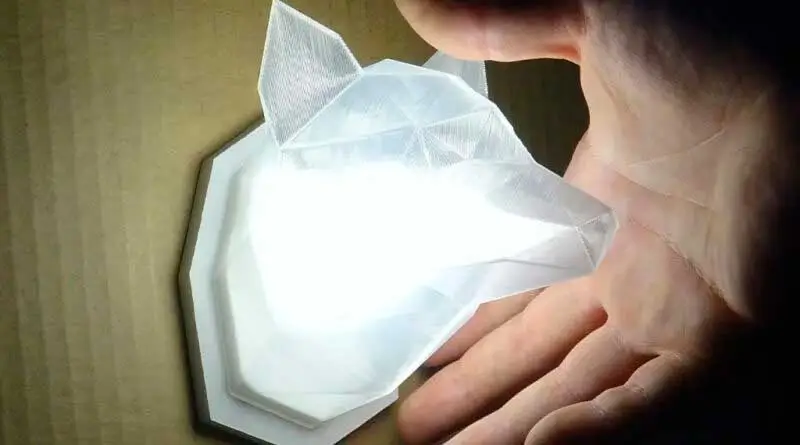
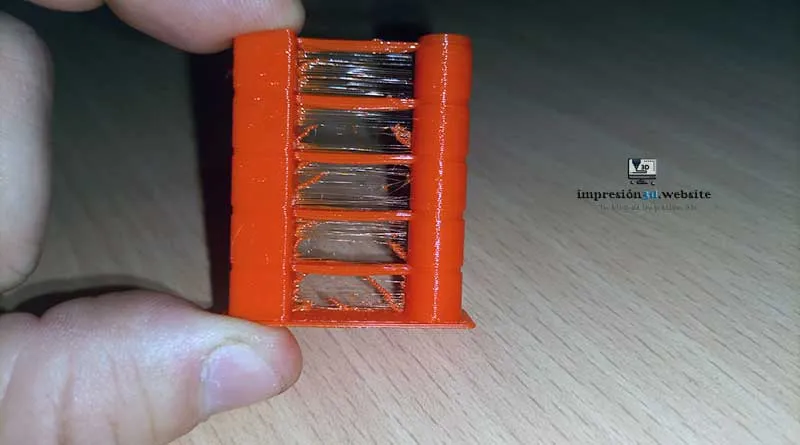
Clear or transparent PLA filaments, as the name suggests, function and behave similarly to standard PLA, but with the particularity of printing in a semi-translucent form.
These filaments are ideal for printing containers or bottles where you want the contents to be visible from the outside.
In addition, they are an excellent aesthetic choice for the fabrication of electronic device housings, such as transparent consoles and controllers, or in projects involving internal light sources that are desired to shine through the plastic.
When working with transparent PLA, you must take into account certain 3D printing configurations.
For example, if you use fill, it will be visible in the final product, so it may be necessary to adjust the fill pattern or even omit it, depending on the desired result.
It is also important to consider the amount of outer layers used, as this will affect the opacity of the print.
As for the brand of transparent PLA we recommend, Geeetech is an excellent choice. With a suggested printing temperature of between 190 °C and 210 °C, this filament is a bit above the usual PLA 3D printing temperatures, but still performs optimally, even in entry-level 3D printers.
PLA hyper (for high speed printing)
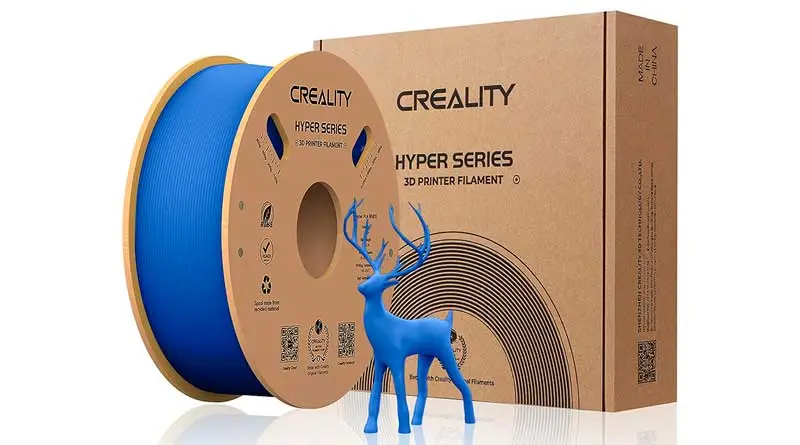
Hyper PLA filaments, as the name suggests, are designed to print at higher speeds than traditional PLA filaments.
These filaments are ideal when you need to speed up your printing process without compromising accuracy or print quality.
Although you may not need high-speed PLA filament if you use a standard 3D printer, if you have a fast 3D printer, you'll see significant benefits.
The filament line Creality Hyper PLAFor example, it can print up to 10 times faster than standard PLA due to its high flow rate and shorter cooling time.
Reducing cooling time is crucial to avoid warping of prints, an occasional problem with standard PLA when printing at high speeds.
High-speed PLA also improves hardness and impact resistance, making it an excellent choice for industrial and prototyping applications, enabling the efficient production of solid and accurate prints.
PLA that glows in the dark

Having a glow-in-the-dark PLA filament can be especially useful during the Halloween season or for projects involving luminescent elements.
Glow-in-the-dark PLA, although it prints in the same configurations as standard PLA filament, contains highly abrasive additives, similar to metallic PLA.
It is advisable to consider using a hardened steel nozzle or having spare brass nozzles on hand.
There are several brands on Amazon that offer glow-in-the-dark filaments, one of our favorites is Overture. Its glow-in-the-dark filament is green in color and is designed to have a higher softening point, which helps prevent clogging.
You can try other brands according to the color of their gloss.:
- Giantarm: Blue, Pink, Green, Yellow, White, Multicolored, Violet
- Sunlu: Luminous Purple (violet), Night white, Luminous Red
- Geeetech: Orange, White, Luminous gradient, Purple,
- Tronxy: Multicolored
- kexcelled: Dark Blue, Dark Cyan, Dark Green,
- RepRapper: Green
Carbon fiber PLA
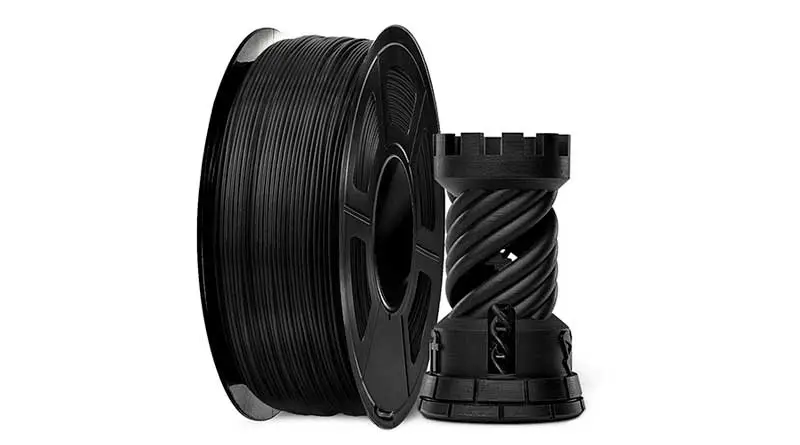
When you are looking for stronger and more durable 3D prints, carbon fiber PLA filament presents itself as an excellent choice.
These filaments are created by mixing carbon fibers with PLA, which gives significant rigidity to the printed parts.
Printing with carbon fiber PLA does not differ much from the conventional PLA printing process. However, due to the carbon fibers, filament may become more brittle and susceptible to breakage.
Therefore, it is advisable to use a 3D printer with a filament sensor to get the best results when working with this material.
In addition, carbon fibers are highly abrasive, which makes them can quickly damage conventional brass nozzles. For this reason, it is suggested to change to a hardened steel nozzle before using this filament.
Carbon fiber PLA excels in projects that require rigidity without adding additional weight. For example, it is ideal for manufacturing drone frames, propellers, tools and other parts that need strength yet must be lightweight.
The recommended carbon fiber PLA filament is from the brand Sunlu. It prints with standard PLA configurations, making it compatible with even basic printers.
The fibers are designed to pass unobstructed through standard nozzles, while its enhanced properties make it an excellent choice for industrial uses and prototyping.
PLA metallic
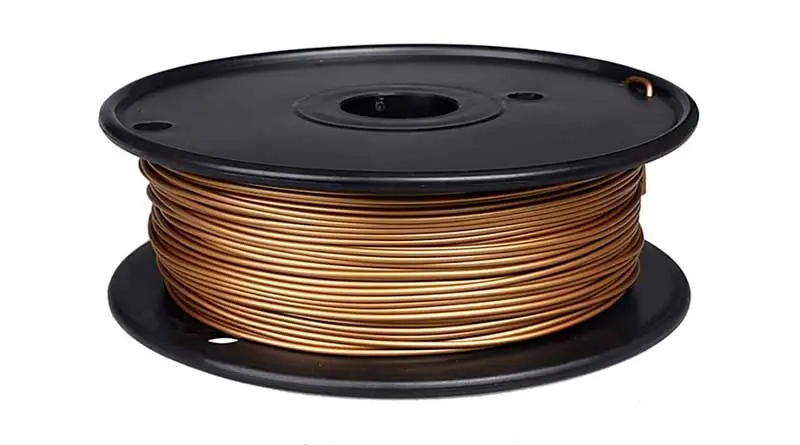
Metal PLA filaments may contain copper, brass, bronze, stainless steel or other metals - you can also oxidize them!
Like wood PLA, metallic PLA filament is manufactured by combining a mixture of metal particles and PLA granules during the manufacturing process. The PLA acts as a bonding agent that allows the metal powders to maintain a cohesive shape.
The final 3D prints retain many of the properties of the base metal, such as added weight and texture. In addition, metallic PLA prints can be sanded or polished like traditional metals. This makes it an excellent solution if you are interested in 3D printing accessories or cosplay items.
The most common metallic PLA filaments contain copper, brass, bronze and stainless steel, and are ideal for aesthetic purposes, such as statues, home decoration and jewelry. They can also be useful for specific industrial applications, depending on the base metal used.
It is important to keep in mind that metallic PLA can be abrasive, hence It is recommended to use stainless steel or hardened nozzles to avoid excessive wear..
As for the brand, Yimihua and Xiome offer some of the metallic PLA filaments available on Amazon.
PLA marble

Marble PLA filament offers a unique aesthetic option for your 3D prints.
It is achieved by adding black specks to a white or gray base, thus imitating the appearance of marble.
These strands are ideal for creating busts, statues, home decor and other items that would normally be made of marble.
For marble PLA Geeetech is one of the recommended brands.
Color changing PLA
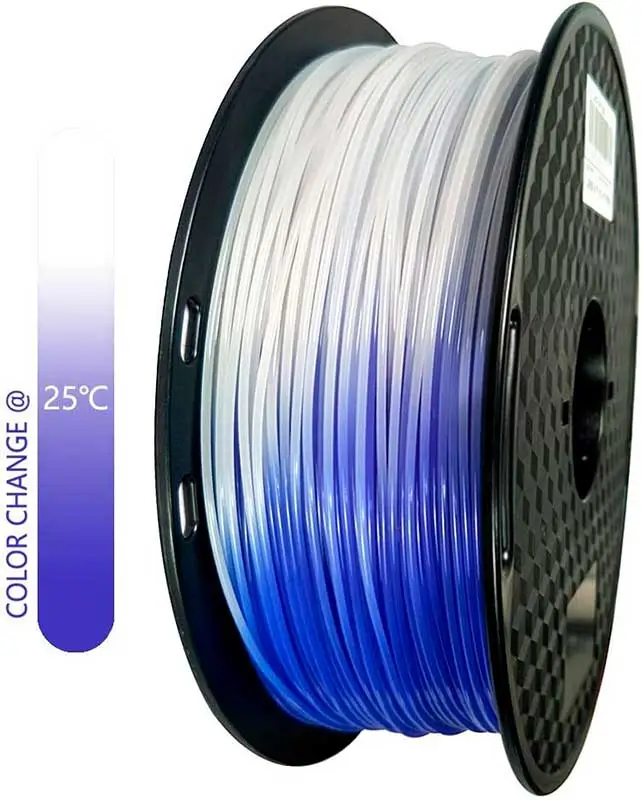
Color-changing PLA is a versatile filament that can change its hue in response to different stimuli.
There are two main types: temperature-activated PLA and UV-sensitive PLA.
Temperature-activated PLA changes color when exposed to specific temperatures, making it ideal for projects that will face variations in ambient temperature.
For example, 3D prints that come into frequent contact with the wearer's skin, such as rings or bracelets, are perfect for this type of filament, as the body heat is sufficient to trigger the reaction.
On the other hand, UV-sensitive PLA changes color when exposed to ultraviolet light. This type of filament is suitable for both indoor and outdoor printing, being useful for objects such as pots or jewelry that may be exposed to different light conditions.
On Amazon, there are several brands in this category, offering options in different color combinations.
Here are some color combinations that are sensitive to temperature change:
- CC3D: Blue to White, Orange to Yellow, Purple Blue to Pink, Brown to Green, Green to Yellow
- R3D: Blue to Pink
- Zi-Rui: Black to Red and Yellow (Tricolor according to temperature)
PLA lightweight
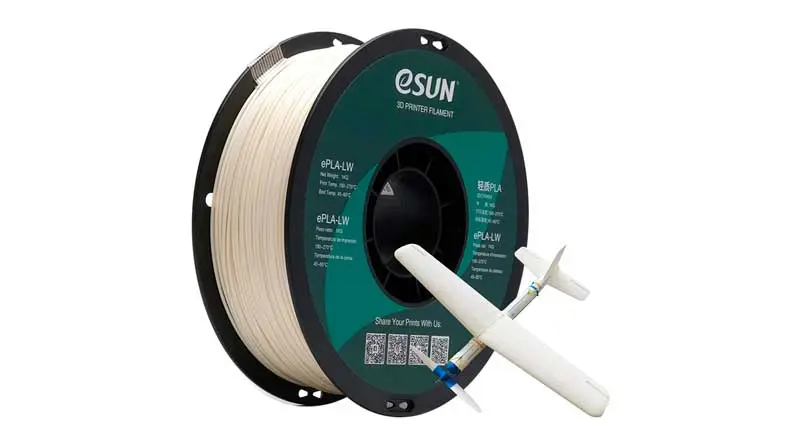
Lightweight PLA, also known as LW-PLA, is ideal for projects that require a lighter load without sacrificing structural integrity.
This filament is created using a special foam technology that significantly reduces the density compared to standard PLA.
Lightweight filaments use either active or passive foam technology. Active foam is activated when heated in the printer hotend, while passive foam is already expanded before printing.
Although passive foam is easier to use, active foam allows you to print up to three times more parts with a single reel.
eSUN PLA Filament Lightweightis an excellent choice for lightweight PLA filament. It uses active foam technology, which allows its use with 3D printing setups.
PLA-LW will start foaming at 210-270℃ printing temperature. The Foaming rate and Strength can be controlled by adjusting the printing temperature.
Practical tests are recommended until the best print settings are found.
Magnetic PLA
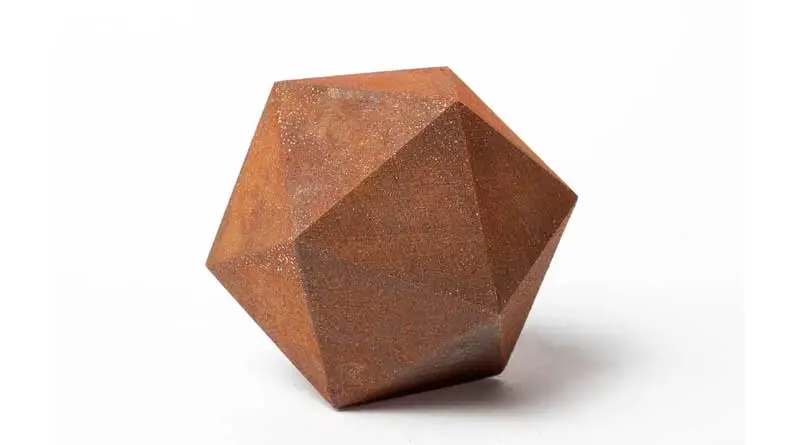
Magnetic PLAalthough it may sound intriguing, refers to an iron-infused metallic PLA filament that reacts to magnets.
Despite its name, this filament is not a magnet itselfbut responds to magnetic fields due to its iron content.
Magnetic PLA can oxidize for aesthetic reasons and is heavier than standard PLA.
It is suitable for switches, sensors, jewelry, accessories, statues and decorative elements in 3D printing.
However, you should keep in mind that This type of filament can be abrasive, so it is recommended to use stainless steel or hardened nozzles to avoid excessive wear.
Protopaste offers one of the most reliable magnetic PLA filaments on the market. They use ultra-fine metal particles to minimize clogging and offer a type of metal-filled PLA specially formulated to withstand higher temperatures than standard PLA filament.
High temperature PLA
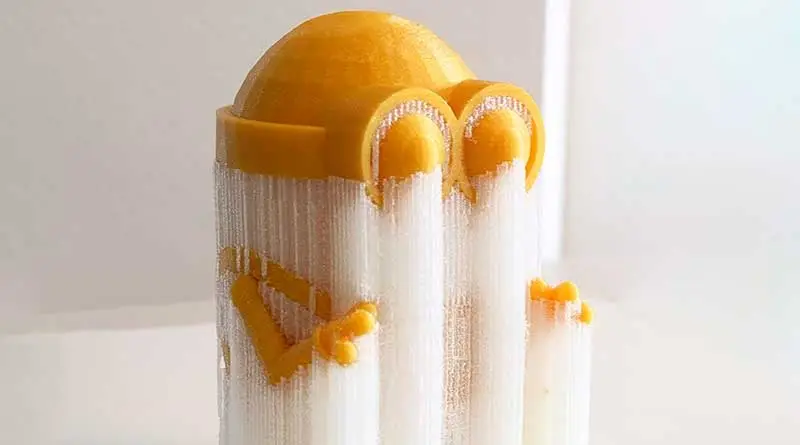
High temperature PLA, or HTPLA, filament is designed for printing at standard PLA temperatures, but can withstand high temperature environments thanks to a process called annealing.
Finished prints are held at a temperature just below their glass transition point for an extended period of time, which activates additional chemicals and polymers in the filament and makes it more heat resistant.
The line HTPLA from Yimihua is available on Amazon. Its HTPLA is more heat resistant than standard PLA, making it ideal for applications where temperature resistance is required.
PLA with glitter
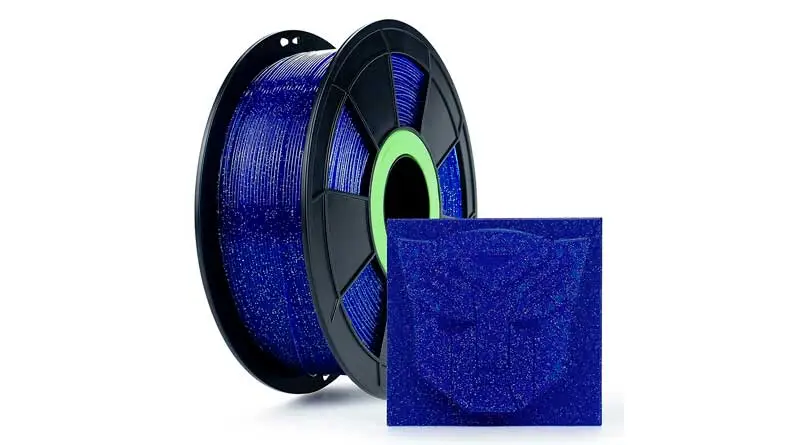
For projects that require an extra touch of sparkle, shiny PLA is the perfect choice. This type of filament contains glitter, iridescent powders and other shiny materials that give 3D prints a dazzling look.
It is ideal for decorative objects, toys and jewelry that need that extra shine.
It is important to remember that glossy PLA can wear brass nozzlesIt is therefore advisable to change them periodically or upgrade to hardened steel nozzles.
Among the available options, glitter PLA filaments from ZIRO are a good choice.
Conductive PLA
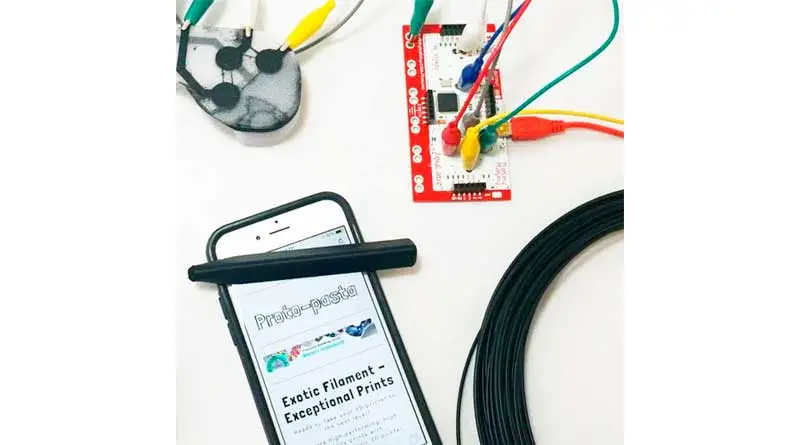
Conductive PLA is a filament that allows you to print electronic components and circuits directly on your 3D printed objects.
Conductive PLA is a variant of PLA filament that contains conductive particles, usually graphite or carbon, which allow electricity to flow through the prints.
Unlike standard PLA, which is electrically insulating, this material opens up a range of possibilities for integrating electronic components into your 3D printed designs.
The most economical option available on Amazon is from the brand MSNJ
What is the strongest PLA filament?
Resistance is a relative aspect that depends largely on the use you give to your prints. In general, when looking for a PLA filament with greater resistance, the filaments PLA+ are a solid and reliable choice.
On the other hand, the filaments HTPLA of Protopaste also stand out as an excellent choice thanks to their durability and ability to withstand higher temperatures after heat treatment. This gives them an additional versatility that sets them apart, even surpassing in some aspects the PLA+ filaments of other brands.
It is important to mention that some composite filaments, such as Carbon fiber PLAcomposite filaments can offer greater durability to your prints, but with certain considerations. In general, composite filaments can cause increased wear on your printer's nozzle and extruder due to the additional particles in the material. Carbon fiber PLA, in particular, can be prone to brittleness.
However, if you are looking for an additional level of reinforcement for your parts, these composite filaments are worthy of consideration. They can be ideal for specific applications where higher tensile strength and increased stiffness are required.
The filaments PLA+, especially those of Protopaste, and composite filaments, such as Carbon fiber PLAare valuable options to increase the resistance of your prints, although it is important to be aware of the possible implications on the wear and tear of your printer and the specific characteristics of each material.
What is the most expensive PLA filament?
PLA filament types span a wide range of costs and there is no one type or brand that is inherently more expensive than others.
The price of these filaments is influenced by several factors, such as the quality of the material, the additives used and their uniqueness.
In general, manufacturers that excel in using high quality materials and rigorous manufacturing processes tend to offer filaments at a higher price compared to brands that sacrifice quality in order to reduce costs.
Additionally, certain additives, such as metallic powders, can contribute to price increasesThe cost of these materials tends to be higher than that of standard PLA filament.
Ultimately, the choice of PLA filament will depend on your specific needs and budget. It is important to consider quality, additional attributes and costs when selecting the right filament for your 3D printing project.
What is the difference between PLA and PLA+?
PLA+ has been carefully formulated to provide greater tensile strength and impact resistance. The term «PLA+» refers generically to any PLA filament that has been modified to improve its physical and mechanical properties.
While increased strength is a feature commonly pursued by PLA+ filaments, PLA+ filaments can also address a variety of problems associated with conventional PLA, such as brittleness, clogging problems, excessive shrinkage or adhesion difficulties.
It is important to note that PLA+ filament formulations can vary considerably between different brands. Therefore, it is essential to carefully review each manufacturer's product descriptions to ensure that they meet your specific needs and expectations.
What is the difference between PLA and Meta PLA?
PLA Meta is a type of PLA filament that is particularly designed for for high flow printing. It is characterized by its greater fluidity in the molten state compared to conventional PLA.
This results in a noticeable reduction in clogging and shrinkage, while improving adhesion and cohesion between layers.
In addition to their improved flowability, PLA Meta filaments have a high gloss surface finish.
They are specifically formulated to provide higher impact resistance and superior toughness compared to standard PLA.
Conclusions:
There is no denying that PLA is an extremely versatile material. It is safe and easy to use, works with a basic 3D printer and is made from natural sources.
While it has some significant disadvantages such as low temperature resistance and brittleness, filament manufacturers have designed numerous types of PLA that significantly improve these characteristics.
From color-shifting to metal-filled to lightweight, there's a type of PLA filament for almost every project you can think of.
PLA filaments offer a wide variety of options for your 3D printing projects.
The choice of PLA type will depend on your specific needs, whether for decorative, functional or experimental projects.
Explore these options and unleash your creativity with 3D printing!
Publications recommended:

Any PLA opaque to light?